
Coordinators: Martin Ramstedt (Martin Luther University Halle), Itziar Alkorta (University of the Basque Country-EHU)
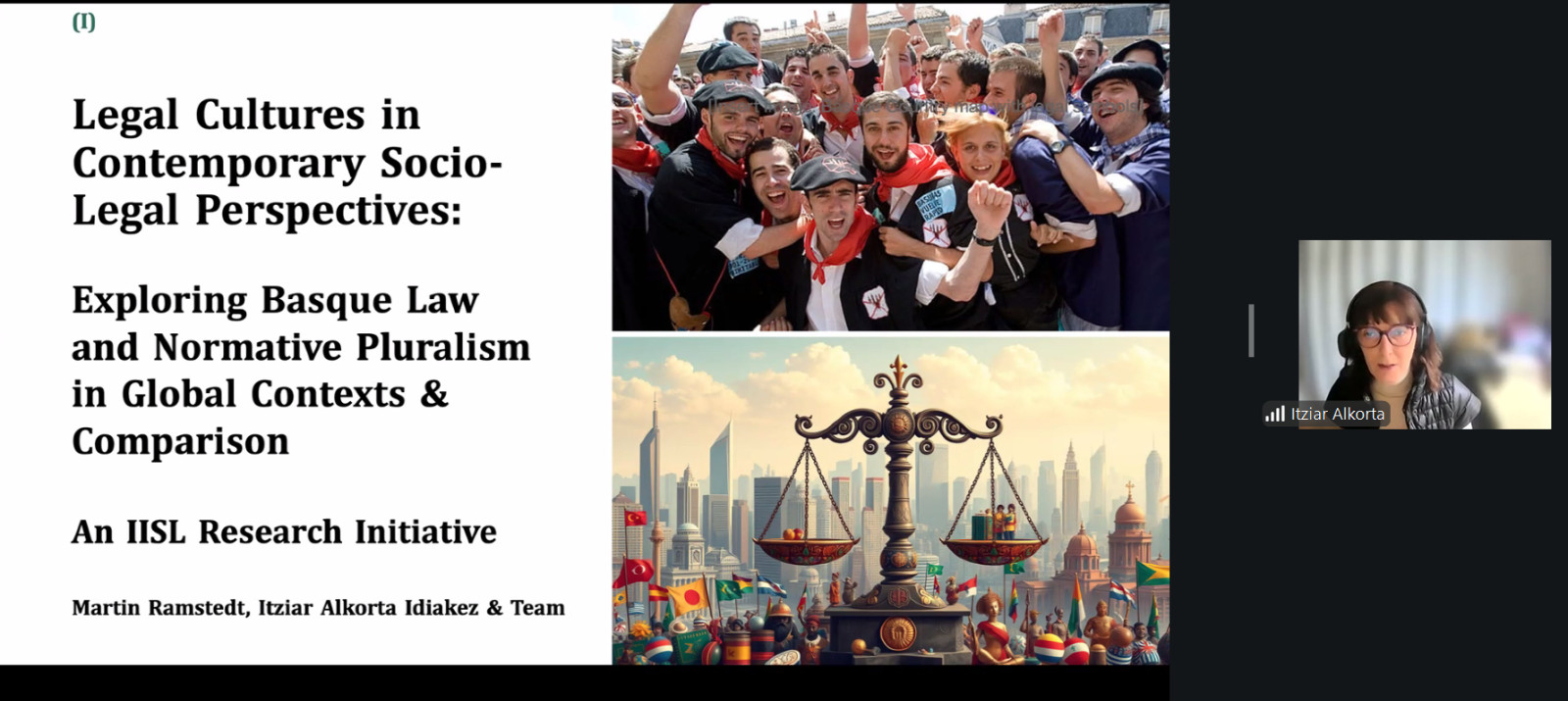
- Purpose and Objectives
This line of research examines how legal cultures come about, develop, and transform within diverse, dynamic social contexts. In so doing, it foregrounds (a) analyses of new forms of normative plural constellations, i.e., of how local traditions of law coexist and interact with other (sub-national, national, transregional, global) state and non-state normative frameworks in the 21st century, (b) post- and decolonial investigations of how colonial legacies continue to shape contemporary legal concepts and procedures, and (c) attention to new forms and technologies of socio-cultural dialogue and tension around justice.
By situating legal cultures at the intersection of socio-economic and socio-political history and culture at large (including religion), this line of research enquires into how different communities imagine fairness, authority, and legitimacy, and how those imaginaries respond to present-day pressures and challenges such as global interdependence, democratic decline, socio-economic polarisation, and environmental deterioration. Tracing these negotiations across multiple legal levels offers a deeper understanding of how principles of justice are continuously reinterpreted in the face of shifting societal demands.
Such an approach to multilevel legal cultures will shed light on how legal cultures today navigate technological disruption, environmental crises, and demands for recognition of cultural diversity. It will also show how minority legal traditions can enrich broader socio-legal debates by offering innovative approaches to accountability, community governance, and rights protection.
The in-depth and multi-level study of Basque law and legal culture(s) provides a concrete opportunity to develop insights for comparison through examinations of various instantiations of normative and legal pluralism in practice. Basque law is indeed constituted by normative pluralism, where historical norms, community practices, and local institutions are in constant negotiation with state legislation and European, as well as international, legal frameworks. Far from being a static tradition, Basque law illustrates the dynamic ways in which the local and the global interact in shaping conceptions of justice.
This research line particularly aims to attract young researchers to the comparative study of Basque law in the context of legal pluralism and provide them with state-of-the-art mentorship, a creative and supportive international research environment, access to international publication venues, an introduction to international transdisciplinary academic networks, and possibilities to benefit from future Basque law development initiatives. In so doing, it will contribute to anchoring the Institute within the Basque Country’s broader science and technology ecosystem, reinforcing its role as a reference point in the study of legal diversity and innovation.
2. Thematic Foci
Thematic foci within this research line include:
- Historical and contemporary dimensions of Basque normative pluralism and its interaction with state, European and international legal orders.
- Cultural and legal imaginaries of justice, fairness, and legitimacy in minority or stateless nations.
- Comparative analyses between Basque law and other minority or regional legal systems throughout Europe (e.g., Catalan, Scottish, Welsh, Flemish, Frisian, Sami, Sorbian, etc.).
- The impact of technological transformation and digital governance on local legal traditions.
- Legal and ethical dimensions of environmental protection and community-based governance.
- Legal responses to cultural diversity, autonomy, and the protection of collective rights.
- The contribution of Basque legal institutions and historical foral traditions to contemporary debates on democracy, participation, and accountability.
Expected Research Outcomes corresponding to this Research Line
During its first year of activity, the research line “Legal Cultures in Contemporary Socio-Legal Perspectives, with special attention to Basque Law” consolidates a shared inductive, actor-oriented, and decolonial methodological framework for addressing the interaction between different normative cultures, integrating ethnographical perspectives with historiographical and comparative approaches. In different seminars and intergenerational mentoring spaces, participants investigate the key conceptual and methodological lacunae in the study of Basque law in society, particularly regarding normative pluralism, hybrid legal orders, inheritance practices, the management of the commons, gender relations, and local governance. The methodological deliberations of the group will result in a proposal for the publication of a Special Issue devoted to methodological approaches to the challenges of legal pluralism, combining more abstract reflections by senior scholars with more empirically grounded contributions by junior researchers.
To get involved, fill in this form.


