Democracy At Risk: Algonormative Expectations and the Threat of Digital Oligarchies
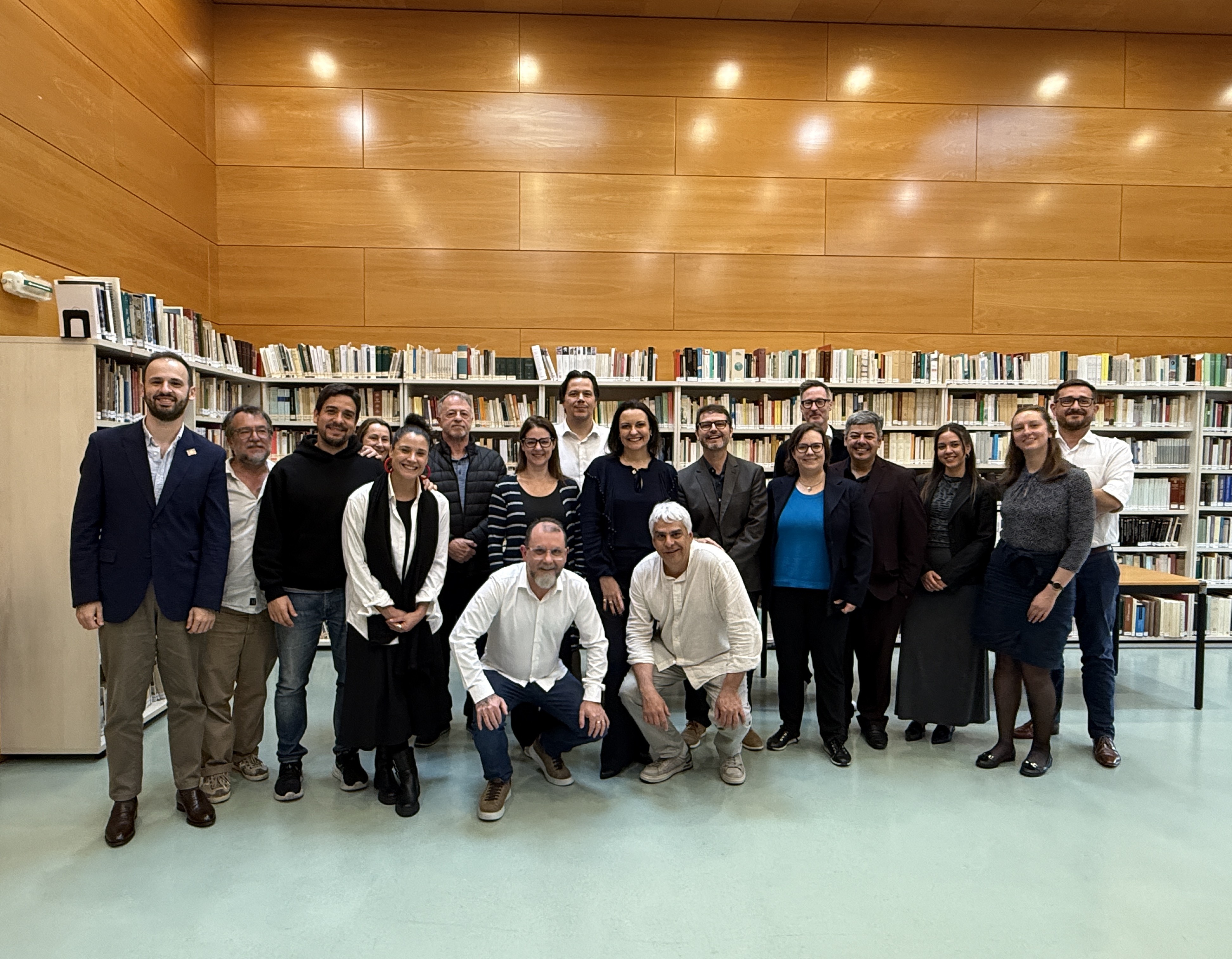
Coordinadores: Germano Schwartz (Fundação Universidade de Caxias do Sul (FUCS) / La Salle University Canoas (Brazil), Renata Almeida da Costa (Pontifícia Universidade Católica do Rio Grande do Sul (PUC-RS, Brazil)
 260424_final_programme_def_v11.pdf
Descripción del encuentro
In contemporary society, the role of digital oligarchies is expanding, becoming even more evident with the first steps and public demonstrations of the second Trump administration. A significant number of the business leaders behind these oligarchies have already made public statements that exert pressure and raise concerns about democracy and the rule of law. As their algorithms become an essential part of decision-making in governance, law, enforcement, and social regulation, among other areas, it is undeniable that a profound transformation is already underway—one that challenges traditional mechanisms of legal legitimacy and democratic participation.
This workshop aims to critically observe and examine these changes through the lens of socio-legal theories, providing an interdisciplinary platform for researchers to debate the implications—and problems—of algorithmic governance in world society.
Legal sociology has a long tradition of analyzing the connections between legal institutions and society. However, digital oligarchies demonstrate that new variables must be considered in these interactions. These oligarchies—represented by a handful of actors such as Google, Meta, Amazon, and X—are capable of influencing normative expectations through algorithmic processes. This raises fundamental questions about power, accountability, and legal normativity.
In this context, algonormative expectations have become an integral element of contemporary society. Conceptually, these expectations carry the meaning of a double contingency originating in virtual communication, based on algorithms, occurring between a non-human collaborator and a psychic system. As a result, they shape the ways in which individuals and institutions condition their expectations regarding the legal system and how they accept legal decisions in a given social context. Thus, to what extent do these operations reinforce or undermine democratic values? And at what level do digital oligarchies shape algonormative expectations?
The originality of this workshop lies in its combination of theoretical, empirical, and critical perspectives on the intersection of law, digital governance, and social exclusion. By bringing together scholars from different regions of world society, the workshop aims to foster a comparative and transnational understanding of these issues.
Our two-days workshop will be structured around four main themes:
- Algonormativity and Digital Oligarchies: Is Democracy in Danger? (First day, morning) – Examining the theoretical foundations of algonormativity and its implications for democratic governance.
- Are Algorithms Redefining the Role of Law? Control and Algorithmic Punishment through Digital Oligarchies? (First day, afternoon) – Analyzing how algorithmic decision-making influences legal control and punitive measures.
- Digital Oligarchies and the Threats to the Rule of Law (Second day, morning) – Investigating the erosion of legal certainty and judicial independence in the face of algorithmic governance.
- Algorithms, Democracy, and Law: Inclusion/Exclusion (Second day, afternoon) – Discussing the paradoxes of algorithmic inclusion and exclusion within legal systems.
This workshop will engage with contemporary socio-legal debates while drawing from socio-legal theories. In doing so, it will offer a unique opportunity to assess how law is being redefined in different regions of world society and explore new avenues for legal scholarship in an era of digital transformation.
Nuestra experiencia en Oñati
First and foremost, we would like to emphasise that this was not the first time we have had the privilege of organising a workshop at the IISL, and each experience has confirmed what we already knew: the Institute offers a truly remarkable infrastructure for academic exchange. Even while temporarily displaced from its original premises, the IISL maintained every standard of excellence we had come to expect — and, if anything, the Provincial Archives of Gipuzkoa provided a setting of rare historical and intellectual dignity that only enriched the atmosphere of our discussions.
The IISL staff deserves special mention. From the very first planning stages to the closing roundtable, the team was attentive, professional, and genuinely committed to making everything run smoothly. Logistics, communication, and on-site support were handled with efficiency and warmth — a combination that is rarer than one might think, and that made all the difference for participants arriving from Brazil, Canada, Sweden, Australia, South Africa, Spain, and Denmark.
Academically, the two days were exceptionally productive. Fifteen scholars engaged in rich, interdisciplinary dialogue across four thematic sessions covering algonormativity and governance, algorithmic redefinitions of law, technopolitics, and questions of inclusion and exclusion in algorithmically mediated societies. The closing roundtable crystallised the collective reflection and pointed toward concrete next steps for the group.
We left Oñati with renewed enthusiasm — and already looking forward to the next opportunity to work with the IISL.
With warm regards,
Germano Schwartz and Renata Almeida da Costa
Workshop Coordination Team
Avenida de la Universidad, 8
Apartado 28
20560 Oñati (Gipuzkoa) - Spain
T: +34 943 78... Ver teléfono
E: workshop@iisj.es